The Fire That Almost Wasn't: Why the Best Nights Start With a Cancelled Plan

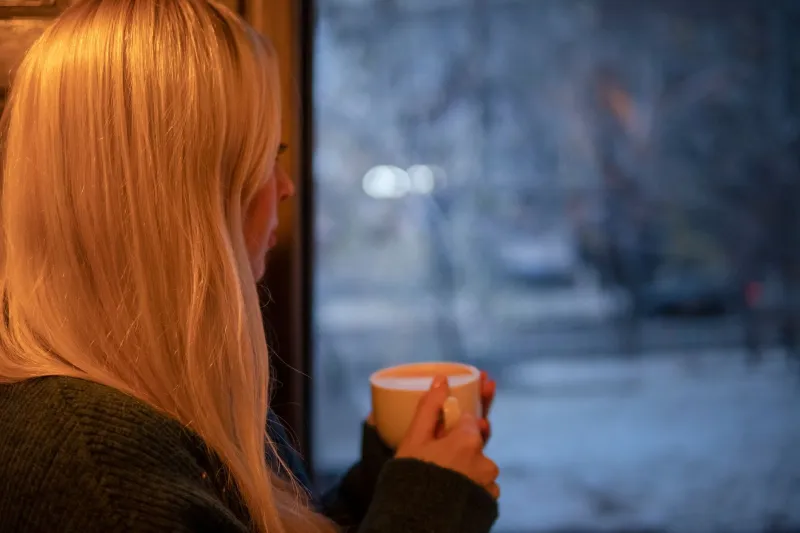
Photo by Photo by Vitaly Gariev on Unsplash on Unsplash
It starts with a text. Something like: "Hey, not sure this is gonna happen tonight — weather looks rough and Jake can't make it." You groan, maybe toss your phone on the couch, and start resigning yourself to a quiet evening. Then someone replies: "Wait, I'm already on my way. Just come." And somehow, against all reasonable odds, that becomes the night you still talk about three years later.
There's something almost mythological about the bonfire that almost didn't happen. The ones that got rescheduled twice, nearly rained out, or came together with half the original guest list and a bag of marshmallows someone found in the back of their car. Those fires burn differently. The people who show up feel different too — looser, less performative, more genuinely glad to be there.
So what is it about the last-minute fire that hits so hard?
The Psychology of the Happy Accident
When plans fall apart, something interesting happens to our expectations. We stop rehearsing what the night is supposed to look like. We stop worrying about whether the setup is Instagram-worthy or whether there's enough of a crowd to make it feel worth it. We just... show up. And in that stripped-down version of gathering, something more authentic tends to emerge.
Psychologists call it "psychological flexibility" — the ability to adapt when your original script gets tossed out. But in bonfire terms, it's simpler than that. When you're not trying to recreate a perfect vision of the night, you're actually present for the night you're in. The conversation gets real faster. The laughter comes easier. Nobody's waiting for the "right moment" because every moment is already unscripted.
There's also a shared-adversity element at play. The people who showed up despite the forecast, despite the fact that three people bailed, despite the fact that there were only two folding chairs and someone had to sit on a cooler — those people chose to be there. That choice creates a kind of low-key loyalty that a perfectly organized event can't manufacture.
Stories From the Ash
Ask almost anyone who's been gathering around fires for years and they'll have at least one story like this.
There's the crew from outside Nashville who'd planned a big fall bonfire for weeks — forty people, a full spread of food, a playlist that took someone an embarrassingly long time to curate. Then the host got sick, the weather turned, and the whole thing got called off the morning of. By nightfall, six people had quietly regrouped at someone's backyard with a six-pack and a fire pit that hadn't been used since spring. They talked until 2 a.m. about things they'd never gotten around to saying at the bigger, louder fires.
Or the college friends from the Pacific Northwest who tried three separate weekends in a row to get a camping trip together, kept failing, and eventually just drove to a state park on a random Tuesday night with no reservations and no real plan. They built a fire in the rain under a tarp, ate gas station snacks, and ended up having what one of them later called "the best night of my twenties."
These stories aren't rare. They're almost a genre unto themselves — the accidental classic, the fire that had no business being that good.
Why Over-Planning Works Against You
There's a certain kind of bonfire host who has everything dialed in. The seating is arranged. The s'mores station is stocked and labeled. There's a schedule, loosely, of when to eat and when to do the "activity." And look — there's nothing wrong with being prepared. But over-engineering a gathering can quietly squeeze the life out of it.
When everything is planned, the night becomes about executing the plan. Guests feel like participants in someone else's vision rather than co-creators of a shared experience. And hosts spend half the night managing logistics instead of actually being present with the people they invited.
The last-minute fire sidesteps all of that. Nobody had time to overthink it. The vibe wasn't decided in advance. The night gets to figure itself out, which is usually when it figures out how to be great.
This doesn't mean you should stop planning entirely. It means holding your plans loosely. It means building in room for the night to surprise you.
The Art of Saying "Just Come Anyway"
One of the most underrated skills in bonfire culture is the ability to salvage a night that's threatening to collapse. It's the person who texts the group at 5 p.m. and says, "Look, it's just gonna be a few of us but the fire's going up at seven." It's the host who decides that a half-empty circle is still a circle.
That willingness to proceed anyway — without the full crowd, without the ideal conditions, without the original plan intact — is what separates the people who have a lot of good memories from the ones who are always waiting for the perfect setup.
Some of the most connected moments happen precisely because things got small. Fewer people means longer conversations. It means someone finally says the thing they've been holding back. It means you actually learn something about the person sitting across the fire instead of bouncing between ten different conversations all night.
Give Yourself Permission to Let It Be Imperfect
If there's a takeaway here, it's this: stop waiting for conditions to be ideal before you light the fire. The forecast will always have some chance of rain. Someone will always have a conflict. The setup will never be exactly what you pictured. And the night will probably be better for it.
The most legendary bonfires in most people's memories weren't the ones that went according to plan. They were the ones that had no plan, or whose plan got thrown out at the last minute, and somehow became something nobody wanted to leave.
So the next time your group chat starts to unravel and it looks like the whole thing is falling apart — consider just going anyway. Bring what you've got. Start the fire. See who shows up.
Because the fire that almost didn't happen? That one tends to burn the longest.