Opening the Circle: How to Bring Someone New Into the Fire Without Losing What You've Built
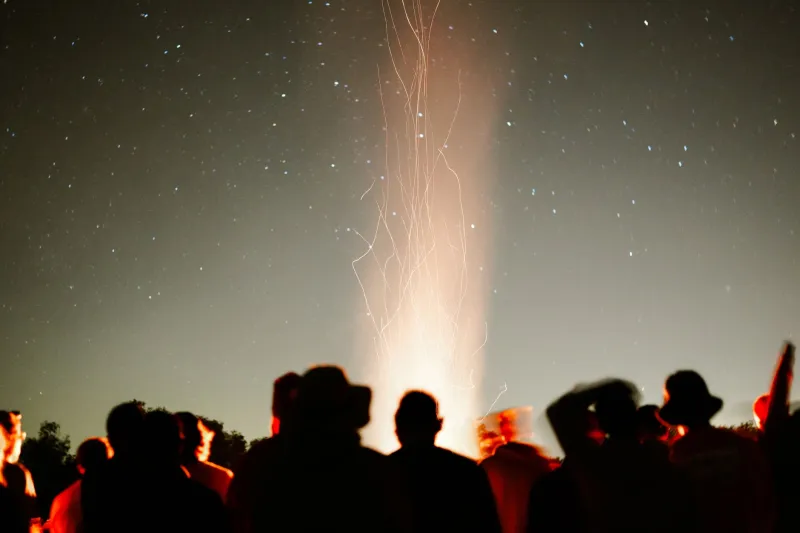
There's a particular kind of magic that settles over a bonfire crew that's been gathering for a while. The jokes land before the punchline. Someone always knows when to throw another log on. The silences don't feel awkward — they feel earned. And then somebody shows up who doesn't know any of that yet.
Maybe your college roommate's new girlfriend is coming. Maybe a coworker heard about the fire and got an invite before anyone really thought it through. Maybe your neighbor finally wandered over after years of watching the glow from their porch. However it happens, a newcomer is standing at the edge of your circle, and suddenly the whole dynamic shifts — even if nobody says a word about it.
This is one of the most underrated social situations in bonfire culture. And honestly? Most people handle it worse than they think they do.
The Anxiety Goes Both Ways
Here's something worth sitting with: the person walking up to your fire for the first time is probably terrified. Even if they're outwardly confident, there's a real vulnerability in joining a group that already has its own language. They don't know the running gags. They haven't earned the shorthand. Every laugh they don't understand is a small reminder that they're on the outside looking in.
But regulars carry their own version of that tension too. Nobody wants to be the group that freezes up or, worse, performs some hollow, over-the-top welcome that feels fake from ten feet away. There's a real fear that the newcomer will disrupt something precious — that the easy, unforced energy you've spent seasons building might not survive the introduction.
Both of those anxieties are completely valid. And acknowledging them, even just privately, is the first step to handling the moment well.
What Not to Do (And Why People Do It Anyway)
The most common mistake is overcompensating. When someone new arrives, a well-meaning regular will sometimes go into full hosting mode — loudly explaining inside jokes, dragging the newcomer into conversations they're not ready for, turning them into the center of attention when all they wanted was a chair and a chance to warm up.
It's generous in spirit, but it usually backfires. Nobody wants to feel like a project. Nobody wants to be the person the whole circle is performing for. It creates a weird pressure that makes the newcomer more self-conscious, not less.
The opposite mistake is just as bad: treating the newcomer like background furniture. Continuing every inside conversation as if they're not there, forgetting to introduce them, letting them sit in silence for twenty minutes while everyone else catches up. That's not protecting the fire's magic — that's just being cliquey.
The Art of the Quiet Welcome
The best welcomes at a bonfire are almost invisible. They're a seat pulled a little closer to the fire. A drink offered without making a production of it. A brief, genuine introduction — first name, one sentence of context — that gives the newcomer something to hold without putting them on stage.
"This is Marcus, he works with Jess" is enough. You don't need a biography. You don't need to force a conversation topic. What you're really doing is giving the group permission to include this person organically, at whatever pace feels natural.
From there, the best thing a regular can do is just... keep being themselves. Tell the stories you'd tell anyway. Laugh at the things you'd laugh at anyway. A newcomer doesn't need a curated version of your crew — they need to see the real one. That's the only way they can decide if they belong.
Give Them a Role, Even a Small One
One of the quietest ways to make someone feel like they're part of the fire and not just near it is to give them something to do. It doesn't have to be significant. Ask if they can grab a couple of sticks from the pile. Let them be the one to pass around the snacks. If someone's got a guitar, ask the newcomer if they have a request.
There's a reason people bond over shared tasks. It sidesteps the pressure of conversation and creates a moment of actual participation. Suddenly they're not a guest watching a show — they're part of the crew, even in the smallest way.
This is something that long-time bonfire hosts do instinctively, and it makes a real difference. The fire becomes a shared responsibility instead of a performance.
Reading the Newcomer's Energy
Not every new person wants to be the life of the party. Some people need to sit quietly for an hour before they open up. Some will be talking over everyone within fifteen minutes. Part of the skill of a good host — or just a good regular — is reading which kind of person you're dealing with and adjusting accordingly.
If they're hanging back, let them. Don't drag them into conversations they're not ready for. Check in quietly, one-on-one, rather than spotlighting them in front of the group. A simple "you good? Need anything?" does more than a round of forced introductions.
If they're jumping in fast and maybe a little too loud, give them room without letting the energy spiral. Sometimes newcomers overcorrect when they're nervous. A little patience goes a long way — the fire has a way of settling people down if you just let it work.
The Moments That Decide Everything
There's usually a specific moment — often unplanned, often small — that determines whether a newcomer becomes a regular or quietly disappears after that first night. Maybe someone laughs at their joke before they've finished telling it. Maybe they get looped into a story and add something that lands. Maybe the group lingers a little longer than usual, and the newcomer is still there when the last log burns down.
Those moments can't be manufactured. But they can be made more likely. When regulars stay present, stay genuine, and resist the urge to either perform or exclude, the conditions are right for that moment to happen naturally.
That's the real magic of a bonfire circle. It's not fragile — it's actually pretty resilient. It can absorb a new person without breaking. And when it does, when someone who was a stranger at the start of the night is laughing with everyone else by the end, the fire feels a little bigger than it did before.
The Circle Gets Stronger When It Grows Right
Here's the truth that's easy to forget when you're protective of your crew: the best bonfire groups aren't static. They evolve. People drift in and out. New voices bring new energy. The regulars who've been around the longest usually got their start as someone's unexpected guest too.
Welcoming someone new isn't a threat to what you've built. Done right, it's proof that what you've built is worth joining. And that's something worth being proud of every time the fire gets lit.


