The Morning After the Fire: Why That Post-Bonfire Emptiness Is Actually Telling You Something

You know the feeling. The fire's been out for hours. You're back in your own bed, maybe still smelling faintly of smoke, replaying a conversation that felt important in the moment. Then morning hits. Coffee's hot, phone's charging, everything's technically fine—and yet something feels off. A little gray. A little too quiet.
That's the bonfire comedown, and if you've experienced it, you're not being dramatic. You're being human.
What Actually Happens Around a Fire
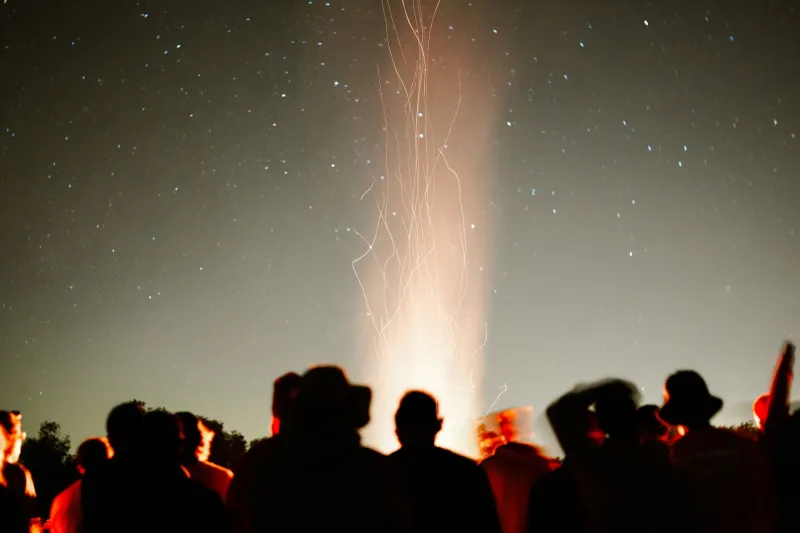
There's a reason people have been gathering around flames since before recorded history. Fire does something to a group. It slows everyone down. It softens the edges of people who normally keep their walls up. The warmth, the low light, the shared act of just sitting there together—it creates a container for the kind of honesty and ease that most of us don't stumble into on a regular Tuesday.
When that container closes—when the last person heads to their car and the embers finally go cold—you don't just lose the warmth of the fire. You lose the version of yourself and everyone around you that only shows up in that space.
That loss is real. And it makes sense that re-entry into ordinary life feels a little jarring.
The Comedown Hits Different for Different People
Not everyone processes a great gathering the same way, and that's worth acknowledging before you start wondering if something's wrong with you—or with your crew.
The replayer wakes up mentally rewinding the whole night. Every conversation, every laugh, every moment where something shifted. This person isn't being obsessive; they're processing. The fire gave them something they needed, and their brain is trying to hold onto it.
The avoider shakes it off fast. Maybe a little too fast. They're back on their phone, back in their routine, pretending the night didn't affect them. Sometimes that's genuinely fine. Other times it's a way of not sitting with how much it mattered.
The connector immediately wants to plan the next one. The group chat lights up before anyone's even driven home. This impulse is sweet, but it can also be a way of chasing the high rather than honoring the night you just had.
The griever feels the weight of it. Not in a bad way, exactly—more like the way you feel after a really good movie ends. Sad it's over. Grateful it happened. Unsure what to do with all of that.
Most of us are some combination of all four, depending on how the night went and where we are in life.
Why the Ordinary World Feels So Loud After the Fire
Bonfire nights operate at a different frequency than regular life. There's no agenda. No performance review. No algorithm deciding what you see next. It's just people, fire, and time moving slowly in the best possible way.
When you step back into the regular rhythm of things—the notifications, the to-do lists, the small frictions of daily life—the contrast can feel almost disorienting. The world didn't change overnight. But you were briefly somewhere that reminded you what it feels like when things slow down and people actually show up for each other.
That reminder stings a little on the way back.
How to Sit With It Instead of Running From It
The instinct is usually to do one of two things: either immediately replicate the experience (plan another fire, text everyone, make it happen again ASAP) or just push the feeling down and get back to normal. Both responses make sense. Neither one is quite right.
Here's a different approach.
Let the morning be slow. If you can, don't rush the day after a meaningful gathering. Give yourself a little buffer. A long walk, a quiet breakfast, some time without a screen in your face. The comedown deserves a little room to breathe.
Write it down before it fades. Not for anyone else—just for you. Jot down what you remember. What someone said. What made you laugh. What surprised you. These moments have a way of dissolving fast, and there's something worth saving in them.
Reach out to one person, not the whole group. Mass texts are easy. A genuine, one-on-one message to someone you connected with that night is something else entirely. It doesn't have to be deep. Just a "last night was really good" goes a long way toward keeping the thread alive.
Resist the urge to immediately schedule the next one. This sounds counterintuitive coming from a site that's basically about gathering around fires as often as possible—but hear us out. When you immediately chase the next high, you skip over the meaning of what just happened. Let the last fire settle before you start building the next one.
Talk about it out loud. If you live with someone, or you have a friend you debrief with, mention it. Say "that was a really good night" and see where the conversation goes. Naming the feeling gives it somewhere to go.
The Comedown Is Part of the Point
Here's the thing nobody really says: the fact that you feel something the morning after is proof the night mattered. Flat, forgettable gatherings don't leave a mark. The ones that do—the fires where something real happened, where people dropped their guard and actually connected—those are the ones that echo.
The emptiness isn't a sign that something went wrong. It's evidence of something going right.
Bonfire culture isn't just about the nights themselves. It's about what those nights build over time—a web of shared moments, inside jokes, vulnerable conversations, and quiet understandings that accumulate into something that actually holds people together. The comedown is just the space between one of those moments and the next.
Sit with it. You've earned it.
And when you're ready—when the feeling has settled and you've given the last fire its due—start thinking about the next one. The circle's still there. The wood's still dry. The people you love are still just a text away.
Gather around. Every moment matters. Even the quiet ones the morning after.