Why the Fire Always Pulls Us In: The Science and Soul of Gathering Around the Flame
Photo: Geoff Charles, CC BY-SA 4.0, via Wikimedia Commons
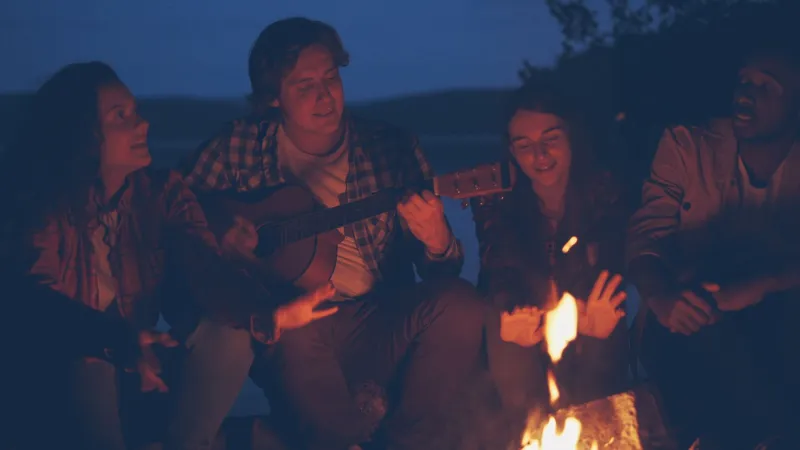
You know the feeling. The sun goes down, someone strikes a match, and within minutes the whole group has shifted — phones down, bodies leaning in, voices dropping into that slower, more honest register. Conversations that wouldn't happen under fluorescent lights or across a dinner table just... happen. Stories come out. Laughter gets louder. Silence becomes comfortable instead of awkward.
Most of us chalk it up to ambiance. But what if it's something far older and more fundamental than that?
A Million Years in the Making
Humans have been gathering around fire for somewhere between 400,000 and one million years, depending on which archaeological evidence you trust. That's not a cultural trend — that's deep biological time. Our nervous systems, our social instincts, our very sense of safety were shaped in environments where fire was the center of everything: warmth, protection, cooking, community.
Anthropologist Richard Wrangham, in his landmark work on human evolution, argued that fire didn't just warm early humans — it fundamentally restructured our social lives. Cooking food freed up time. That extra time became evening hours. And those evening hours, gathered around the fire, became the original social space. Storytelling, music, ritual — all of it likely started right there, in the glow.
Think about that the next time you're sitting around the bonfire at a Fourth of July cookout or a fall tailgate. You're not just hanging out. You're participating in something that stretches back further than language itself.
What Happens to Your Brain in the Firelight
Modern psychology has started to catch up with what humans have always instinctively known. A 2014 study published in Evolutionary Psychology by University of Alabama researcher Christopher Lynn found something striking: watching fire — specifically the flickering, unpredictable movement of flames — measurably lowers blood pressure. The longer the exposure, the greater the effect.
Lynn's interpretation? Fire watching is a form of relaxation response, possibly evolved over millennia. The brain associates flames with safety, warmth, and the presence of community. In a world full of constant stimulation and low-grade anxiety, fire offers something rare — a focal point that doesn't demand anything from you.
There's also the matter of firelight's color temperature. The warm amber and orange tones of a flame sit at the opposite end of the spectrum from the blue-heavy light of screens and overhead lighting — the kind that suppresses melatonin and keeps us wired. Firelight, by contrast, signals the body that the day is winding down. Muscles ease. Guards drop. People become more themselves.
That's not just poetry. That's neuroscience.
The Circle as a Social Technology
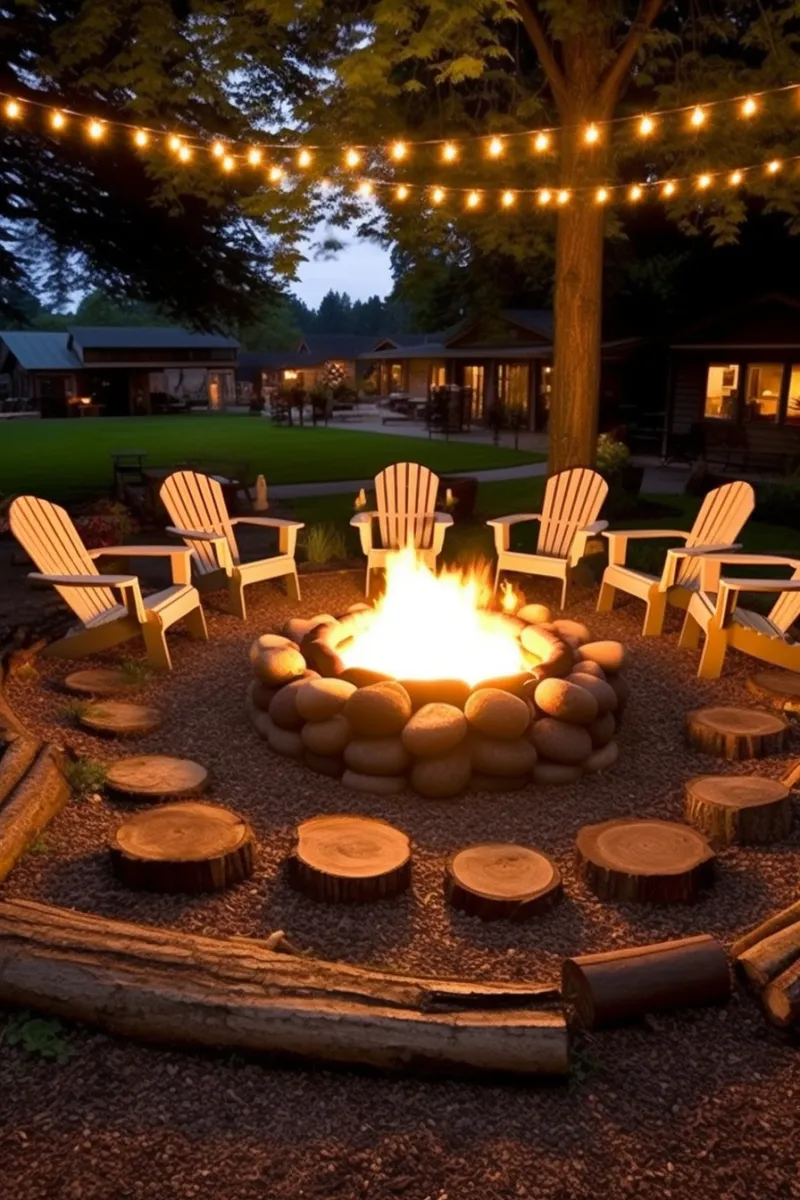
There's something specific about the shape of a bonfire gathering that matters — the circle. Unlike a dinner table with a head, or a theater with a stage, a fire circle has no hierarchy. Everyone faces the same center. Everyone is equally visible to everyone else.
Sociologists have long noted that circular seating arrangements tend to produce more democratic, emotionally open conversations. No one is at the back of the room. No one is presenting to an audience. The fire becomes the shared focal point, and that shared focus creates what psychologists call common ground — the sense that we are all oriented toward the same thing, which makes it easier to feel oriented toward each other.
This might be why bonfire conversations tend to go deeper than party conversations. The setting isn't just atmospheric. It's structurally designed — by thousands of years of evolution and social practice — for connection.
Fire as Ritual, Across Every Culture
Look across human history and you'll find fire at the center of almost every significant communal ritual. Diwali lights up South Asian communities with thousands of flames. The Jewish tradition of Lag BaOmer involves bonfires across Israel and diaspora communities. Native American fire ceremonies mark seasonal transitions and spiritual milestones. Celtic Beltane bonfires welcomed summer. The Olympic flame, carried across continents, links athletes and nations through a single symbolic fire.
In the American context, bonfires are woven into the cultural fabric in ways we often take for granted. High school homecoming bonfires. Beach fires on the Jersey Shore and the Gulf Coast. Harvest bonfires across the Midwest. Backyard fire pits that become the unofficial third place for neighborhood friendships.
These aren't coincidences. Every culture that has ever existed has used fire as a gathering point because fire, at its core, is a technology for making community possible. It keeps predators away. It extends the usable hours of the day. And it creates a reason — a literal, physical reason — to stay close.
The Modern Loneliness Problem and the Ancient Solution
Here's where it gets personal. The United States Surgeon General's 2023 advisory declared loneliness a public health epidemic. Millions of Americans report having no close friends, no one they can call in a crisis, no sense of belonging to a community. Social media, for all its reach, has largely made this worse — offering the appearance of connection while delivering the experience of performance.
Against that backdrop, the resurgence of bonfire culture feels less like nostalgia and more like necessity. People are actively seeking the kind of unstructured, low-pressure, face-to-face time that fire gatherings naturally provide. The fire doesn't have a comment section. There's no algorithm deciding who gets to speak. You just show up, sit down, and let the night happen.
That's the AMW Bonfire ethos in a nutshell: every moment matters, and the moments that matter most tend to happen when we're gathered around something real.
You Already Know This
You don't need a study to tell you that something shifts when the fire goes up. You've felt it — maybe at a campsite in the Smokies, maybe in a friend's backyard in suburban Texas, maybe at a beach bonfire in Southern California where the Pacific fog rolls in and the whole world narrows to the circle of light.
That feeling isn't accidental. It's ancient. It's biological. It's human.
The bonfire doesn't just bring people together. It reminds people — at a level beneath words — that being together is what we're for.
So the next time someone says we should have a bonfire, say yes. You're not just making weekend plans. You're answering a call that's been going out for a very, very long time.