What the Fire Reveals: Reading Your Friendships Through a Bonfire Night
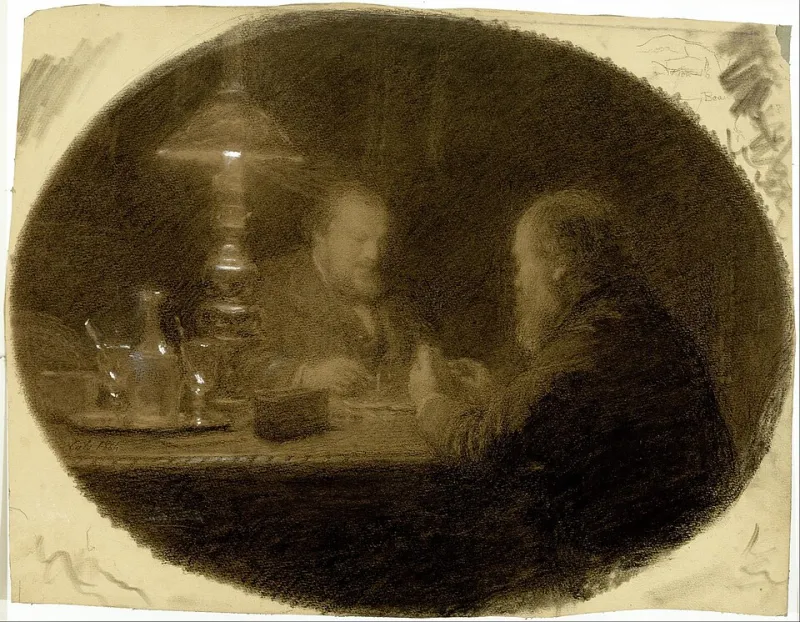
Photo: Adolphe-Félix Cals, Public domain, via Wikimedia Commons
There's something about a fire that strips the social performance away. No background music to fill the silence. No scrolling through your phone to dodge an awkward pause. Just heat, light, and the people sitting across from you. If you've ever paid close attention at a bonfire, you already know: the circle tells the truth.
We talk a lot about friendship—who our people are, how much they mean to us—but we rarely stop to examine how those friendships actually function. A bonfire night, it turns out, is one of the best stress tests you've got. Not because anything dramatic has to happen, but because the simplicity of the setting makes every dynamic visible.
The Roles People Play (Whether They Know It or Not)
Spend enough time around fires and you start noticing patterns. People tend to fall into a handful of recurring roles, and those roles aren't random. They reflect something real about who that person is in your life.
The Storyteller commands the circle. They lean forward, hold eye contact, and know exactly when to let a pause breathe before landing a punchline or a gut-punch moment. These are the friends who make every gathering feel like it meant something. They're generous with their energy—but watch closely. Is the story always theirs? Does the Storyteller know how to hand the floor off, or does the fire only burn when they're feeding it?
The Caretaker is the one poking the logs, making sure nobody's cup is empty, quietly asking the quieter person across the circle what they've been up to. You might not notice them at first because they're not performing. But the warmth of the whole night runs through them. If you have a Caretaker in your circle, you are lucky—and you should probably tell them that more often.
The Observer sits a little back from the ring, listening more than speaking. They're not checked out; they're taking it all in. These are often the friends who, on the drive home, say the one thing that reframes your entire evening. Don't mistake silence for absence. The Observer sees everything.
The Outsider is trickier. Sometimes they're a new addition to the group, still finding their footing. Sometimes they're someone who used to be at the center and has drifted. And sometimes—this is the uncomfortable one—they're someone you invited but didn't actually make room for. The Outsider's presence at your fire is worth sitting with. Did they leave early? Did anyone notice?
What Happens When the Group Dynamic Gets Honest
Here's the thing about bonfire culture: it rewards authenticity and punishes pretense. You can fake enthusiasm at a house party. You can hide behind a busy buffet line at a cookout. But around a fire, you're just... there. That kind of exposure can be uncomfortable, especially in friendships that have been running on surface-level energy.
If your group spends the whole night talking about nothing—not the comfortable nothing of old friends at ease, but the anxious nothing of people avoiding real conversation—that's worth noticing. If one person dominates while everyone else performs attention, that's worth noticing too.
A healthy bonfire circle has a rhythm to it. Conversations rise and fall. People share and listen in turns. Laughter comes easy. The silences aren't awkward—they're earned. That rhythm is the same rhythm a good friendship runs on.
The Snack Run and Other Small Defections
Okay, let's talk about the person who disappears for snacks every time the conversation gets real. We all know one. Maybe we've been one.
Physical movement around a bonfire is telling. The person who constantly needs to refill their drink, check on the cooler, or take a call might be doing exactly what it looks like—avoiding depth. Or they might be the group's unofficial host, keeping logistics running so everyone else can relax. Context matters.
But if you notice that certain people only show up to the easy moments and vanish when someone at the circle starts talking about something that actually matters, file that away. Friendships need people who can stay in the hard conversations, not just the fun ones.
Are You Showing Up the Way You Think You Are?
This is the real question the fire asks. Not about your friends—about you.
Are you the person who makes space for the quieter voices in your circle? Do you know when to stop talking? When someone at the fire looks distant, do you notice, and do you do anything about it? When you leave a bonfire night, do the people you care about feel more seen than when they arrived?
The bonfire is a mirror as much as it's a gathering place. The roles we play around the fire are usually the roles we play everywhere else—they're just harder to hide when the only light is coming from the flames.
What a Good Circle Actually Feels Like
A bonfire where the friendships are working has a specific texture. Conversations weave between people without one voice hogging the thread. Someone new gets folded in naturally. Old stories get retold, but there's room for new ones. People leave feeling fuller than when they arrived—not because anything extraordinary happened, but because they were genuinely present with people who were genuinely present back.
That's the standard worth holding. Not perfection. Not performance. Just a group of people who actually show up for each other, night after night, fire after fire.
Next time you're sitting in the circle, take a breath and look around. Really look. The fire's already telling you everything you need to know.