Your Thanksgiving Needs a Fire, Not Another Course
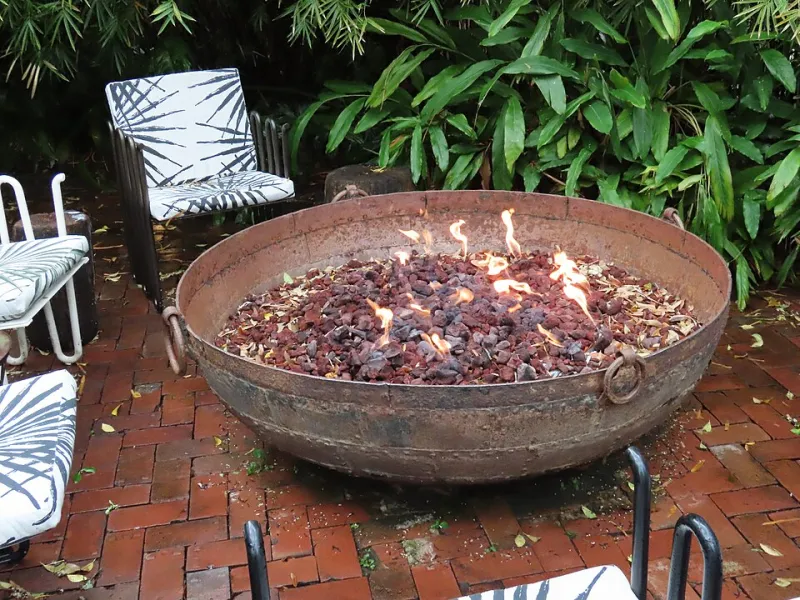
Photo: abbeyprivate, Public domain, via Wikimedia Commons
Thanksgiving has a weird second act. The turkey is down to scraps, the good plates are stacked in the sink, and everyone is either overstimulated or quietly looking for a door. That is not the moment for another hosted event. It is the moment for a small fire.
A backyard or patio fire after dessert is not a party. It is a pressure-release valve. The table asks everyone to sit up, pass things, and perform gratitude on cue. A fire asks almost nothing. People can stare at the flames, warm their hands, and say something real when they are ready. For families that love each other but do not always like the same room, that difference matters.
The Case for a Second-Act Fire
The best part of a post-Thanksgiving fire is that it has no program. There is no centerpiece, no assigned seating, no toast, and no obligation to stay for one more round of pie. The fire is the activity. That takes the pressure off the host and gives guests an easy way to be together without being on.
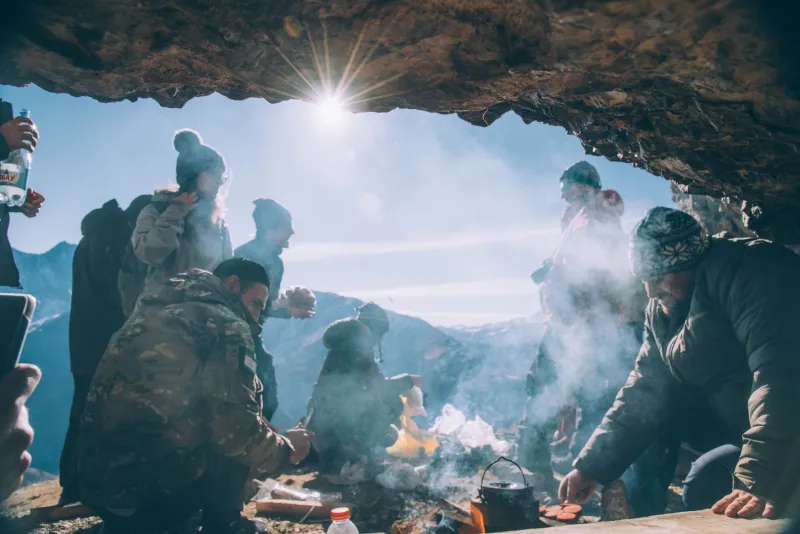
It also changes the conversation. At the table, people talk across a wide room. Around a fire, the circle is smaller and the light is lower. Side conversations happen naturally. The loud uncle can find the cousin who likes cars. The quiet aunt can talk to the kid who is home from college. Nobody has to moderate a whole table.
Set It Up Like You Barely Tried
This is not the night for a Pinterest setup. Clear a safe area, set out a few chairs in a loose circle, and stage what you need before people arrive: dry wood, a long lighter, fire starters, a bucket of water, and a flashlight for the path. A basket of blankets near the door is nice. A full outdoor bar is not required.
If you have a fire pit, use it. If you have a patio chiminea, fine. If you have neither, a portable fire pit with a screen can work in a driveway or on a safe cleared patio, as long as local rules allow it. Check burn restrictions, wind, and distance from the house. Do not move a fire under a roof overhang or into a garage. Keep kids and pets back from the hot zone.
The vibe should say we are winding down, not welcome to the after-party. Keep the fire modest. A small, steady fire is easier to manage and easier to leave. When the wood runs out, the night has a natural ending.
Time the Transition, Do Not Announce It
Do not schedule the fire for 7:00 p.m. like a second dinner reservation. Watch for the natural cue: someone pushes back from the table, someone says they need air, or the kids start orbiting the back door. That is when one person can go light the fire.
Let people drift out. Do not make a group announcement that traps everyone. Coffee and hot cocoa can move outside. Dessert can stay inside. The fire is optional, and that is exactly why it works.
Conversation Starters That Work Across Generations
Skip the heavy prompts. What are you grateful for is a table question. Around the fire, go lower stakes. Ask about the best sandwich anyone has ever had, the first concert they paid for, the worst haircut in family history, or the one skill they wish they had learned sooner. Ask the kids what they would put on a family flag. Ask the older generation about a trend they cannot believe came back.
A good fire question is easy to answer, hard to answer badly, and does not require anyone to reveal more than they want to. If the talk goes quiet, let it. Silence around a fire is not a failure. It is part of the point.
Include Everyone Without Making It a Thing
Non-drinkers should not be an afterthought. Put hot cider, cocoa, tea, and sparkling water out with the same care as anything else. Do not make a toast mandatory. Do not ask why someone is not drinking. If there is alcohol, keep it low-key and away from the fire.
Kids can be included with simple jobs and clear rules. They can carry blankets, choose the marshmallow sticks, or help set out cups. They should not run near the fire, poke it, or handle lighters. A small basket of glow sticks or flashlights can give younger kids something to do without turning the yard into a carnival.
The Exit Ramp Is the Gift
The best host move after Thanksgiving is letting people leave. Do not build a fire that demands three hours. Keep it small, keep it warm, and let the last log be the signal. Walk people out with a flashlight. Put the fire out completely with water, stir the ashes, and check again.
Thanksgiving does not need a finale. It needs a soft landing. A low fire after the pie gives a family somewhere to be together without being seated, judged, or scheduled. That is not another event. It is the afterglow.