When the First Freeze Hits, Build a Smaller, Warmer Fire
Photo: 玄史生, CC0, via Wikimedia Commons
The first real freeze changes the sound of a backyard. The grass crunches. The air gets sharp. The fire seems brighter because the dark around it is deeper. A summer fire is a sprawl. A cold-weather fire is a huddle. That is not a downgrade. It is the whole point.
Late fall is underrated as fire season. The bugs are gone. The neighbors are inside. The night gets quiet early. If you host it well, a cold snap fire can produce the most intimate conversations of the season. The trick is to stop pretending it is still September. Build smaller. Start earlier. End sooner. Make warmth the plan.
Why the Cold Changes the Circle
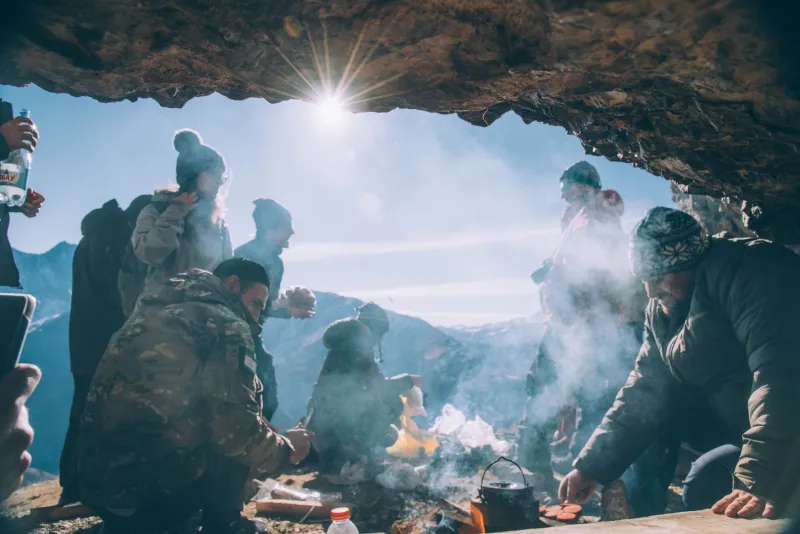
A fire in July is easy to ignore. People drift, mingle, and stand far apart because the night is comfortable without the flames. In freezing weather, the fire becomes the only warm thing in sight. The circle tightens. People lean in. Voices drop. You can hear the fire and not much else.
The cold is also a filter. The people who show up really want to be there. Nobody is standing around because it seemed like a good idea at five o’clock. That smaller, more intentional group often means better talk. Phones stay in pockets because hands are cold. The night has a natural deadline. All of that adds up to something that feels less like a party and more like a pocket of warmth in a cold week.
Layer First, Then Light
Do not ask people to tough it out. Tell them to dress for the cold, not for the photo. Base layers, wool socks, a hat, gloves, and boots that can handle cold ground are the real party outfit. A blanket basket near the door helps. So do seat cushions, because a cold chair pulls heat right out of you.
Keep a warm staging area inside if you can. A pot of cocoa, a kettle of hot water, and a place to warm fingers for a minute can save the night. Hand warmers are cheap and weirdly powerful. If you have a dryer, throw a few blankets in for ten minutes before people arrive. It is a small move that feels absurdly good.
Keep the path clear of ice and wet leaves. Cold nights hide slick spots. A couple of flashlights or a string of battery lights on the walkway are not decor. They are safety.
Build a Smaller Fire
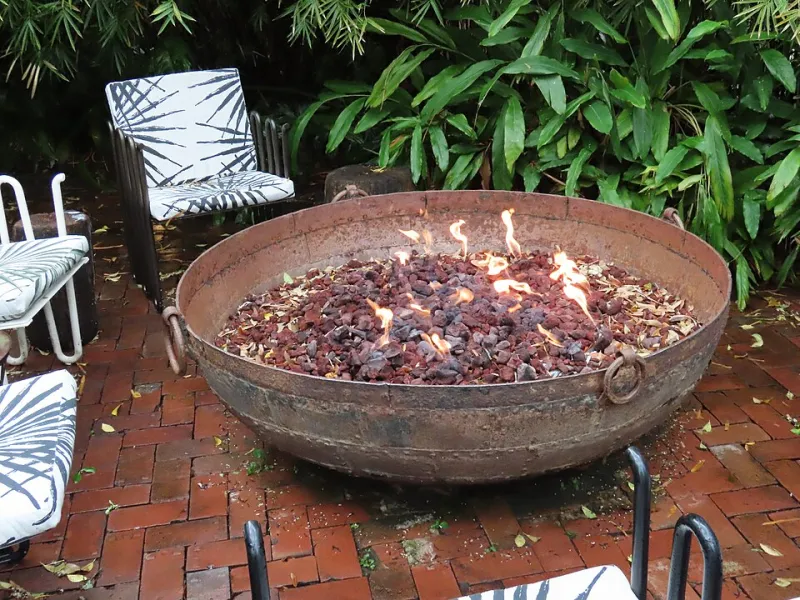
A cold night does not require a bonfire the size of a car. A smaller, hotter fire is easier to manage and throws more usable heat into the circle. Use dry, seasoned wood. Keep the fire pit on a stable surface and away from low branches, deck rails, and anything that can catch a spark.
Check local burn rules and the wind before you light. Do not use lighter fluid or gasoline. Do not burn trash, wrapping paper, or pressure-treated wood. Keep children and pets a safe distance back. Never bring a fire pit into a garage, tent, or enclosed porch. Carbon monoxide is not a risk worth flirting with.
Short Format Beats All-Night Endurance
A freezing-night fire is not the time for a four-hour marathon. Start earlier, around five-thirty or six, and plan to end by eight. Tell people the window: fire from six to seven-thirty. A short invite is easier to accept and easier to leave.
Serve warm food that can sit in a pot: chili, soup, baked potatoes, or a simple grilled cheese station. Keep the music low. The fire is already doing the atmosphere work. When the wood runs out, let the night end. The cold gives you an exit ramp, and you should take it.
Make Room for the Cold-Averse
Not everyone loves a brisk night. Some people run cold. Some have kids who will not keep gloves on. Some just want to sit inside where the thermostat lives. Do not make them feel like party poopers. Offer an indoor overflow spot where people can thaw out and come back. A twenty-minute cameo is a success.
Non-drinkers should have real options: hot cider, cocoa, tea, sparkling water, or a warm mocktail. Kids need clear fire rules and a job that does not involve the flames. Pets need a warm indoor spot or a short visit, not a night of shivering by the woodpile.
The Case for the Brisk Night
There is a reason people remember cold-weather fires. The discomfort outside makes the warmth feel earned. The circle is smaller. The talk is slower. You are not there because the weather is perfect. You are there because someone made a warm place in a cold week and invited you into it.
That is the promise of a freeze-night fire. Not toughness. Not a longer party. Just a closer circle. Build it small, keep it warm, and let the first cold snap do what it does best.