Sunday Night Dread Hits Different After a Bonfire: Here's Why

The High Was Real. So Is the Drop.
You know the feeling. Sunday night rolls around and the warmth you carried home from the fire — the easy laughs, the stories that kept going past midnight, the way the whole world seemed to shrink down to just that circle of people and that glow — starts to fade. By Monday morning, you're sitting in traffic or staring at a work inbox and something feels genuinely off. Like something was taken from you.
That's not you being dramatic. That's the bonfire comedown, and it's more common than most people admit.
What's Actually Happening in Your Brain
Bonfires aren't just nice. They're neurologically potent. When you gather around a fire with people you care about — or even people you're just getting to know — your brain gets a serious cocktail of feel-good chemistry. Oxytocin, the bonding hormone, spikes when you're in close physical proximity with others, sharing warmth, making eye contact, laughing together. Dopamine flows when you're engaged in conversation that matters. Even the act of watching flames has been shown in research to lower blood pressure and induce a mild meditative state.
So when all of that disappears at once — the fire goes out, everyone drives home, and the world picks back up where it left off — your nervous system notices. That contrast between Saturday night's fire and Monday morning's fluorescent lighting isn't just a vibe shift. It's a real physiological drop.
And here's the thing: the better the bonfire, the harder the landing.
Why Bonfires Hit So Much Harder Than Other Social Events
You probably don't feel this wrecked after a happy hour or a dinner party. So what makes the bonfire different?
A few things, honestly. First, bonfires tend to run long. You're not wrapping up after two hours — you're there until the wood runs out or someone has to be at work early. That extended immersion creates a kind of altered state. You forget your phone, you lose track of time, you actually rest inside the conversation instead of rushing through it.
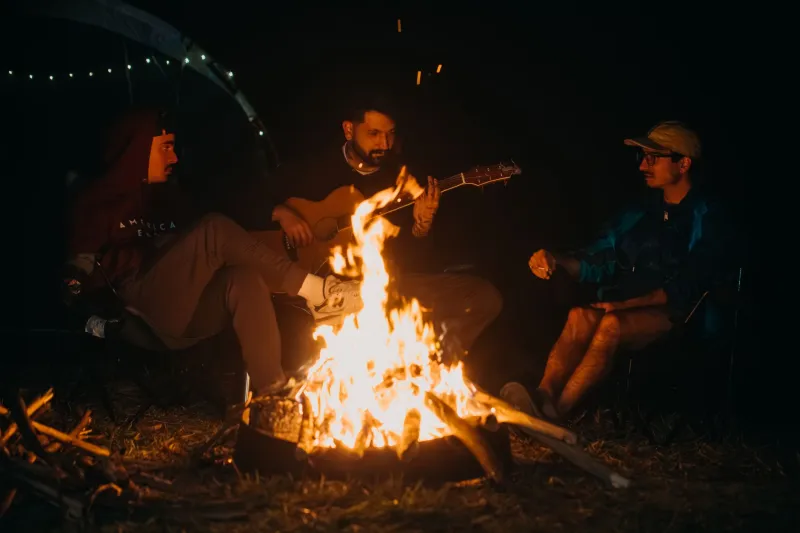
Second, bonfires strip away the noise. There's no background music blasting over the talking, no screens demanding attention, no waiter interrupting every ten minutes. It's just people and fire. That kind of unfiltered connection is genuinely rare in modern American life, and your brain recognizes it as something precious.
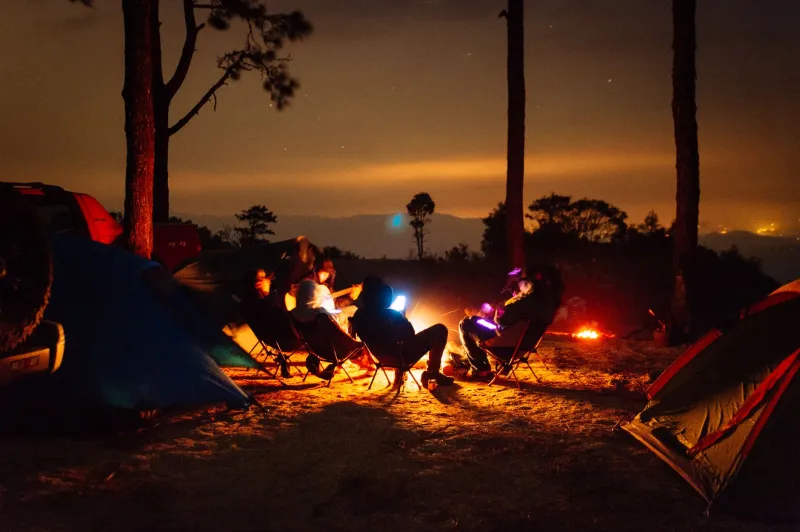
Third — and this one's underrated — bonfires happen outside, usually at night, often in the cold. That physical experience creates a sensory memory. The smell of smoke in your jacket, the ache in your legs from sitting in a camp chair too long, the particular quality of dark sky above the treeline. Those sensory anchors make the experience stick in a way that a bar or a restaurant just doesn't.
When all of that is suddenly gone, the absence is loud.
The Loneliness Underneath the Letdown
Sometimes the bonfire comedown isn't just about missing the fire. It's about missing the version of yourself that showed up to it.
Around a bonfire, people tend to be more open. More themselves. Conversations go deeper faster than they do in almost any other setting. You might have talked about something real — something you don't usually bring up — and felt genuinely seen for a few hours. Then Monday comes and you're back to small talk, back to performance, back to the version of you that keeps things surface-level because that's what the workweek demands.
That gap — between who you got to be at the fire and who you have to be on Monday — can feel like grief. And in a small way, it is.
What You Can Actually Do About It
The good news is that the comedown doesn't have to just sit there. There are real ways to soften it, extend the connection, and carry some of that fire-energy into the week.
Reach out before Monday fully takes over. Even a quick text to someone from the fire — a shared photo, a callback to a joke from the night before, a simple "that was a good one" — keeps the connection alive. It sounds small but it matters. You're signaling to your brain that the community didn't disappear just because the flames did.
Name the next thing before the embers cool. One of the best cures for post-bonfire emptiness is already having something to look forward to. You don't have to plan every detail on the spot — just float the idea. "Same thing in three weeks?" or "We should do this before it gets too cold" is enough. Anticipation is a real mood stabilizer, and knowing there's another fire on the horizon takes the edge off the current one ending.
Let yourself feel it instead of fighting it. This one sounds counterintuitive, but the comedown often gets worse when you try to push through it or pretend it isn't there. Acknowledging it — even just saying to yourself, that was a really good night and I miss it — is actually part of processing it. You're not broken. You just had a meaningful experience and your emotional system is catching up.
Create a small ritual for Sunday nights. A lot of people find that having something to do in the hours after a bonfire helps bridge the gap. A slow drive home with the right playlist. A shower before bed with the smoke still in your hair. A few minutes writing down one thing you want to remember from the night. These aren't magic fixes, but they create a transition instead of a hard stop.
Invest in the friendships off-season. The bonfire comedown is sometimes a signal that you're only seeing your people in these big, seasonal moments — and that the connection doesn't have much scaffolding the rest of the time. That's fixable. A standing monthly hangout, a group chat that actually gets used, a habit of checking in — these things keep the fire alive even when there's no literal fire.
The Emptiness Is Trying to Tell You Something
Here's a reframe worth sitting with: the Monday morning crash isn't a sign that something went wrong. It's a sign that something went right. You felt genuinely connected. You were fully present. You experienced something that mattered.
Not everyone gets that. Not every weekend delivers it. The fact that yours did — and that you miss it now — says something good about you and about the people you're gathering with.
The bonfire doesn't have to end when the last log burns out. It lives in the people who were there, in the stories you're already reshaping into something worth telling, in the next time you pull up a chair and someone strikes a match.
Monday's rough. The fire was worth it. Both things are true.